Wedding Dresses: Styles, Fabrics and Buying Advice
Wedding dress guides covering silhouettes, fabrics, used gowns, alterations and budgets, with tools to help you narrow your choice.
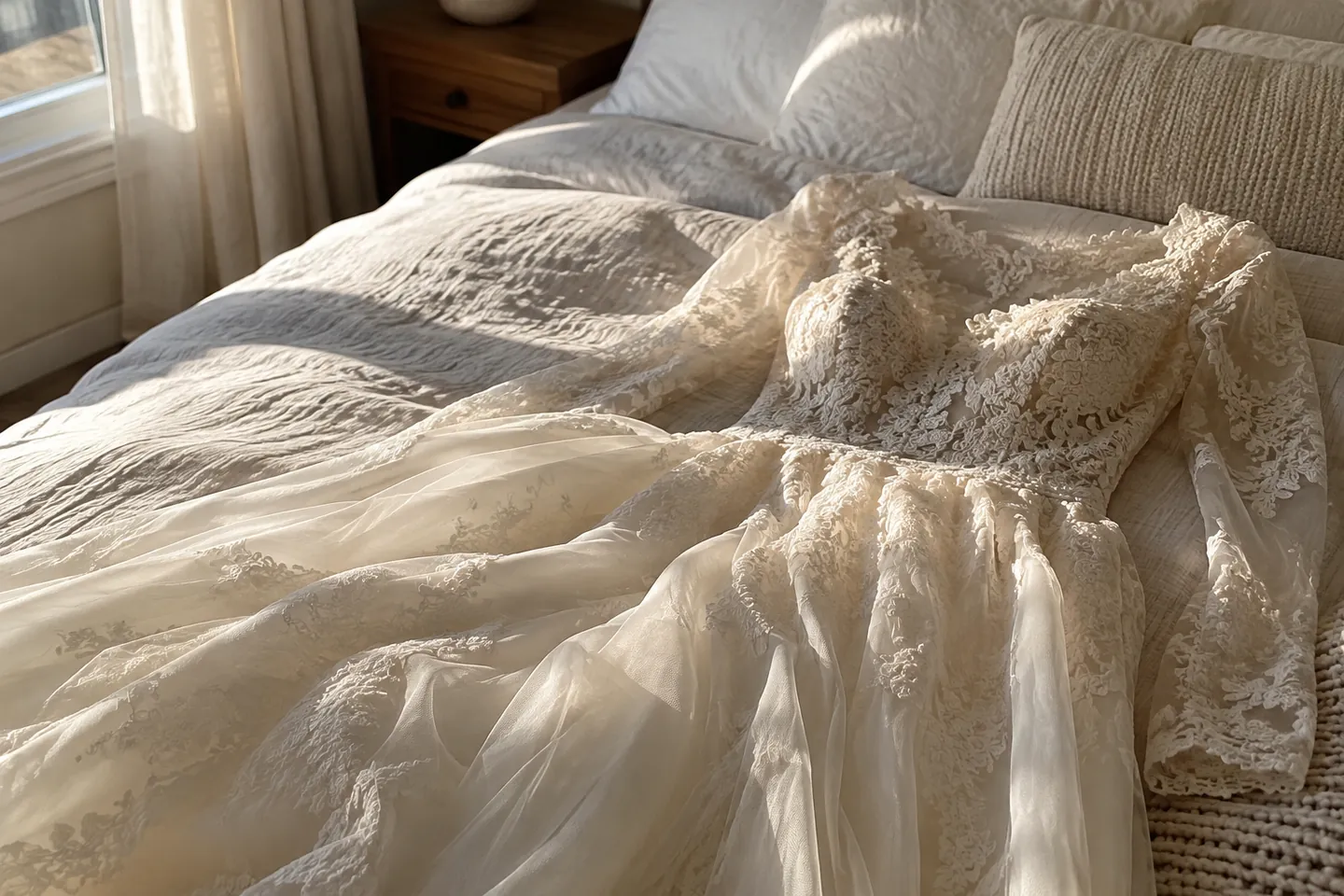
A wedding dress has three jobs. It has to fit your body, suit the place where you will say your vows, and feel right when you move. The guides below take those jobs one at a time, starting with the shape of the gown and ending with the money.
Start with the shape
The silhouette sets the overall look. Our guide compares A-line, ball gown, mermaid, sheath and column shapes, with notes on venues and on how each one moves. Use the silhouette finder in that guide to see which shape your answers point to.
Choose the fabric for the day
Satin, crepe, tulle, chiffon, organza and lace behave very differently in heat, in wind and under a long day of wear. The fabric guide compares them by look, drape, comfort and care, and explains which ones photograph well.
Buy used, with care
A used gown can be a strong buy if you know what to check. The buying guide covers measurements, seams, stains, structure and the questions to ask a seller before you pay. The consignment guide explains how shops share the sale price and what to put in writing.
Plan the alterations and the budget
Most wedding gowns need some alteration. Our cost guide gives typical ranges and a timeline for the fittings, and the budget planner shows how to split the total across the gown, the alterations, the accessories and a contingency.
Then look after the gown
After the wedding, the gown needs professional cleaning and careful packing. The care guide explains timing, storage and what to avoid.