Style guide
Wedding Dress Silhouettes: A-Line, Ball Gown, Mermaid and More
A practical guide to wedding dress silhouettes. Compare A-line, ball gown, mermaid, sheath and other shapes, and find the one that fits your venue and body.
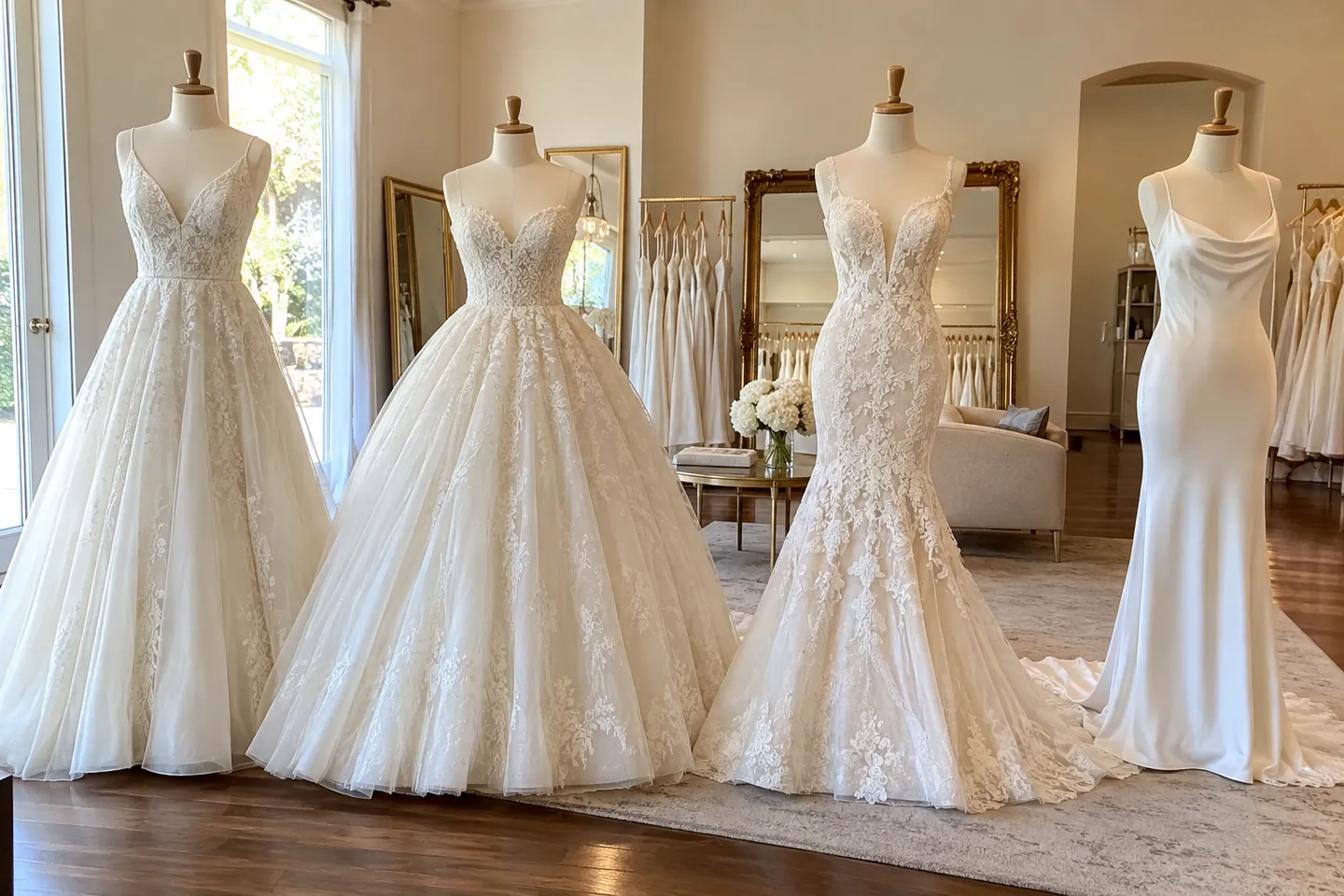
In this guide
- The main silhouettes at a glance
- A-line: the most forgiving shape
- Ball gown: classic and structured
- Mermaid and trumpet: the fitted option
- Sheath and column: minimal and straight
- Which silhouette suits your venue?
- What your body needs from the silhouette
- How to try silhouettes without overspending
- Shape and proportion: what the rules get wrong
- What to check at a fitting
The silhouette is the overall shape of a wedding gown, from the neckline down to the hem. The most common shapes are the A-line, the ball gown, the mermaid, the sheath and the column. Each one flatters different bodies and suits different venues, and the right choice depends more on how you want to move than on any single body rule.
The main silhouettes at a glance
| Silhouette | Shape | Works well for | Watch out for |
|---|---|---|---|
| A-line | Fitted at the bodice, flaring gradually from the waist | Most body types, indoor and outdoor venues | Can look plain without good fabric or detail |
| Ball gown | Fitted bodice, full skirt over a petticoat | Formal churches, grand ballrooms | Heavy, takes up space, harder to dance in |
| Mermaid | Fitted through the hips, flaring at the knee | Modern, sculpted looks, evening receptions | Restricts walking unless the flare is gathered |
| Sheath | Narrow, straight and close to the body | Minimal, city and courthouse weddings | Shows every fit issue, needs precise tailoring |
| Column | Straight and loose, no defined waist | Beach, garden, relaxed events | Can hide the waist if you want it defined |
A-line: the most forgiving shape
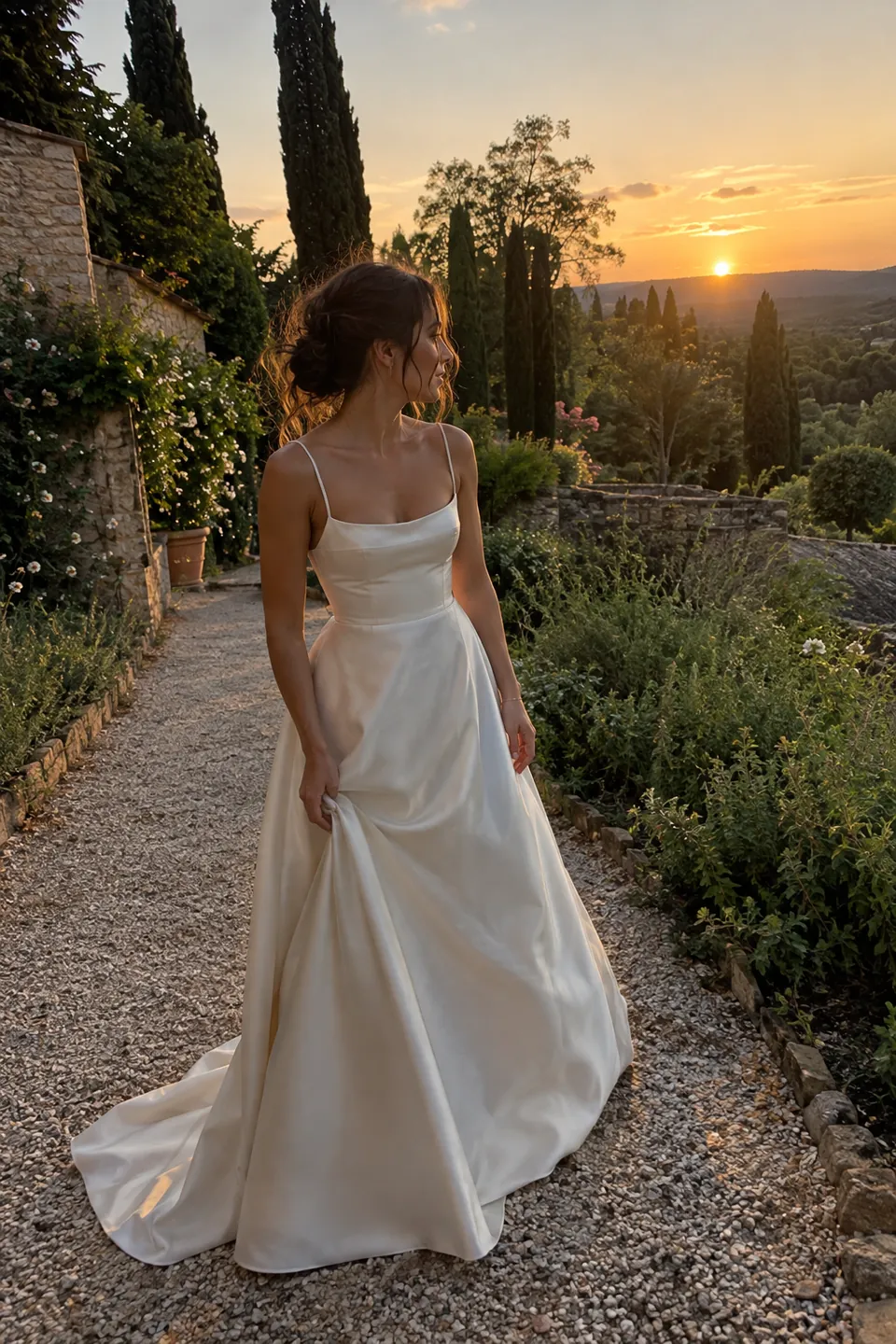
The A-line is the safest choice for many brides because it balances the upper body and the hips. The bodice follows your shape, and the skirt widens gently from the waist. It works with satin, crepe, tulle and lace, and it moves well for a full day of walking and dancing.
Check the flare. A good A-line has a clean line from the waist to the hem, without a sudden puff or a sharp kick at the knee. If the skirt pulls to one side when you turn, the fit needs adjusting in the side seams.
Ball gown: classic and structured
A ball gown has a fitted bodice and a full skirt that stands out over a petticoat or crinoline. It is the traditional look for formal churches and large receptions. The skirt can be made from tulle, organza or satin, and the petticoat controls the volume.
Ball gowns are heavy and take up space. Try them on with the petticoat and with the shoes you plan to wear. Check how the gown sits when you sit down, because a full skirt can crush and wrinkle, and the bodice must still fit comfortably when you bend.
Mermaid and trumpet: the fitted option
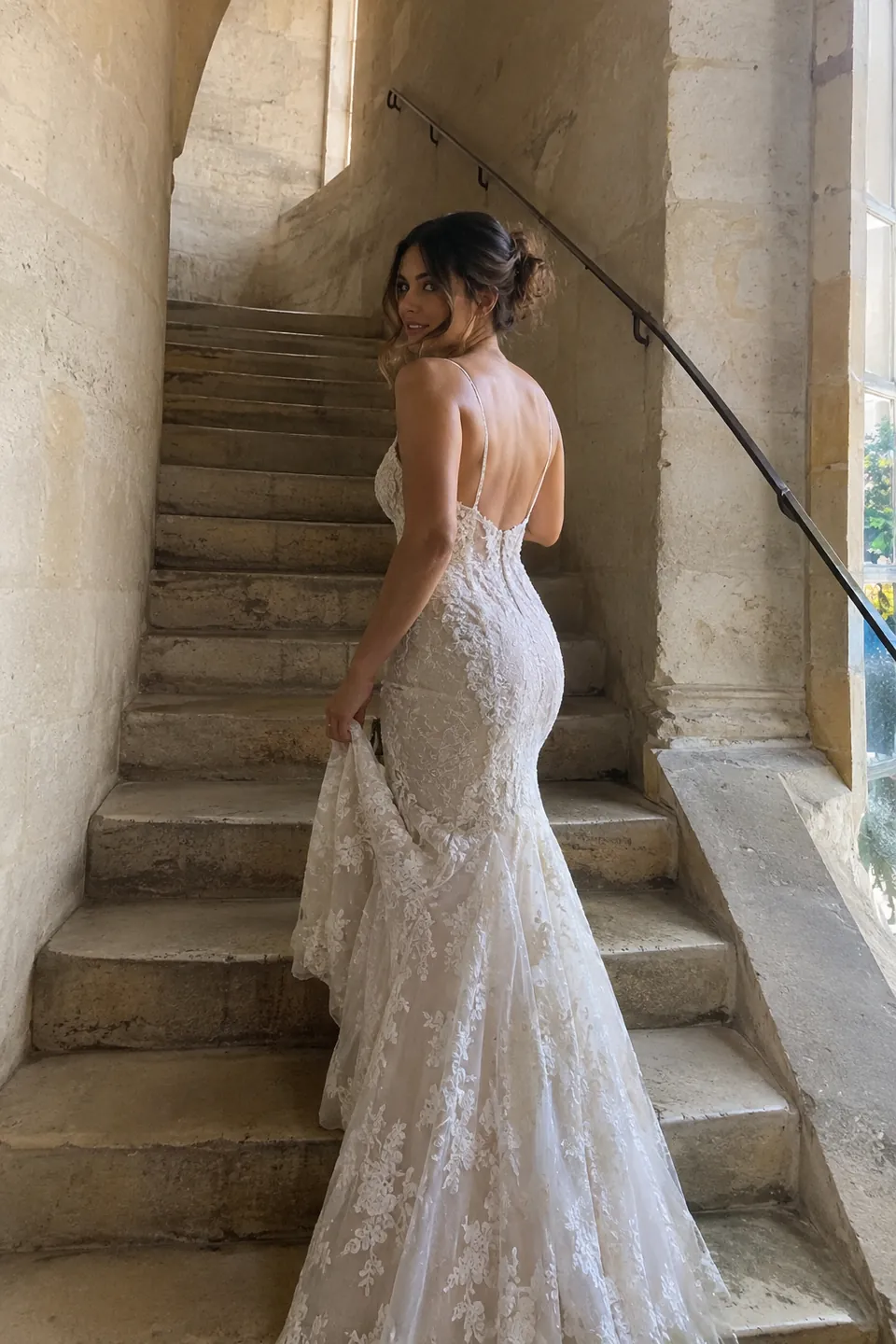
A mermaid gown follows the curve of the body from the bust to the hips, then flares out at the knee or below. The trumpet version flares a little higher. Both are dramatic and suit evening weddings, modern venues and brides who want to show the shape of their figure.
The mermaid is the hardest shape to alter. The fitted section must sit exactly on your hips and waist, and the flare must not restrict your stride. Ask whether the flare is gathered or built with a lining that gives you room to walk.
Sheath and column: minimal and straight
A sheath is narrow and straight from the bust to the hem, usually with little or no skirt volume. A column is similar but looser, with no defined waist. These shapes suit simple ceremonies, courthouse weddings, and brides who prefer a clean, modern line.
Because there is little structure to hide behind, the fit must be exact. A sheath that is a centimetre too large at the waist will look like a different dress. Ask for the gown to be tried on in your shoes and with the undergarments you will wear.
Which silhouette suits your venue?
Choose the shape that matches the setting and the way you plan to move:
- Church or formal hall: ball gown or A-line with a train
- Garden or outdoor ceremony: A-line, column or a softer ball gown in chiffon or organza
- Beach or relaxed venue: column, slip-style or a light A-line in crepe or chiffon
- Courthouse or city wedding: sheath, column or a simple A-line in crepe
- Evening reception with dancing: A-line or a mermaid with a gathered flare
Find your silhouette
Answer two questions. The result explains the shape, and the guide above explains the details.
Answer every question to see your result.
What your body needs from the silhouette
Silhouettes are not rules. A bride with a narrow frame can wear a ball gown, and a bride with a fuller figure can wear a mermaid with the right boning. Think about three things: where you want the eye to go, how much structure you want through the bodice, and how the skirt will feel when you walk, sit and dance.
Try at least three silhouettes in the same fabric. You will learn more from a side-by-side comparison than from photos alone. Take photos of yourself from the side and back, because those views show the skirt shape better than the mirror does.
How to try silhouettes without overspending
You do not need to buy a gown to learn which silhouette suits you. Book a fitting in a bridal shop, or try on samples at a consignment store, and ask to try at least three shapes in the same colour. Stand in front of a full-length mirror, then turn slowly, sit down, lift your arms and walk to the door. Note which shape you forget about, because the best gown usually disappears once you are wearing it.
Photograph each try-on from the side and back. A silhouette that looks flat in the mirror may show its shape clearly in a photograph taken at a distance. Compare the photos on a phone, not on the mirror, and rank the three shapes you like best.
Shape and proportion: what the rules get wrong
Bridal magazines often say that a particular shape suits a particular body type. These rules are a starting point, not a verdict. A ball gown can look striking on a narrow frame if the bodice fits well, and a sheath can look elegant on a curvy figure if the fabric drapes rather than clings. What matters most is where the seams fall, whether the bodice sits flat and whether the skirt moves with you.
Pay attention to the waist. A defined waist, whether shown by seams, a sash or a bodice cut, gives most silhouettes a clear structure. A column or sheath without a waist needs more precise fitting, because there is nowhere for a loose seam to hide.
What to check at a fitting
- The bodice lies flat across the bust and under the arms, with no gaps and no pulling
- The skirt hangs straight from the hips, without swinging to one side
- The hem sits correctly with the shoes you will wear
- You can sit, bend and dance without the gown riding up or splitting a seam
- The train, if there is one, falls smoothly and does not catch when you turn
Frequently asked questions
Which wedding dress silhouette is the most flattering?
There is no single answer. The A-line is the most forgiving for many body types, but the best silhouette is the one that fits well and lets you move comfortably.
Is a ball gown too much for a small wedding?
Not necessarily. A ball gown in a light fabric such as tulle or organza can suit a small church or a garden wedding. A simpler skirt and a lighter petticoat reduce the bulk.
Can a mermaid gown be altered if it does not fit?
Often yes, but the fitted section is difficult to change. Make sure the bodice and hips fit before you buy, and ask a seamstress about the flare and the lining.
What silhouette works best for dancing?
An A-line or a mermaid with a gathered or loose flare allows the most movement. Heavy ball gowns can be tiring for a long evening.
Does the silhouette change the veil I should wear?
It can. A long veil frames a ball gown well, while a short veil or a blusher suits a sheath or column. The veil length guide covers this in detail.
Keep reading
Alterations
Wedding Dress Alteration Costs and Timeline
How much wedding dress alterations usually cost, which changes are expensive, and how far ahead to book your fittings so the gown is ready on time.
6 min read
Accessories
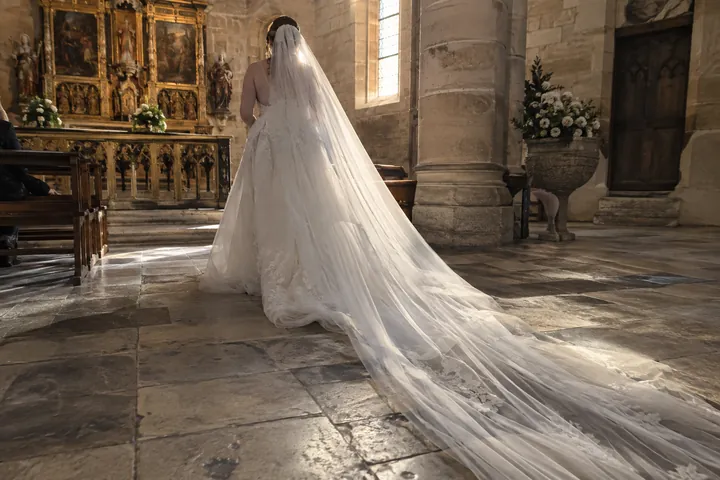
Bridal Veil Lengths: Fingertip, Chapel, Cathedral and More
Bridal veil lengths explained, from fingertip and waltz to chapel and cathedral. Learn how to choose a veil that suits your gown, venue and height.
6 min read
Fabrics
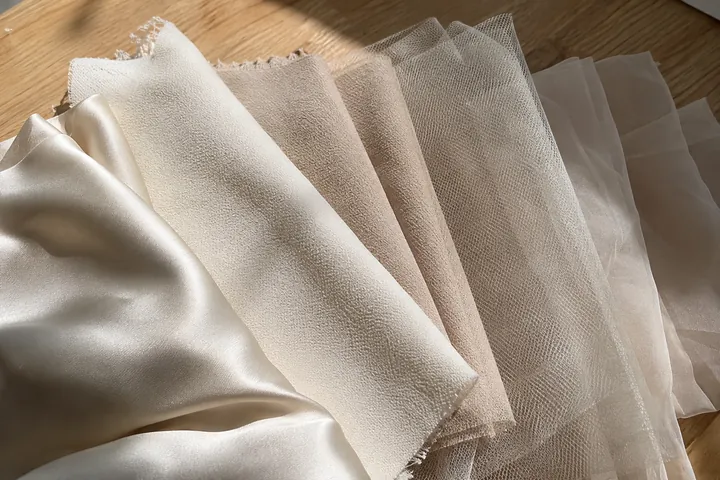
Wedding Dress Fabrics: Satin, Crepe, Tulle, Chiffon and Lace
Compare the main wedding dress fabrics, including satin, crepe, tulle, chiffon, organza and lace, by look, drape, comfort, care and cost.
6 min read