Care and storage
Caring for a Wedding Dress After the Wedding
How to clean, store and protect a wedding dress after the big day, including timing for professional cleaning, acid-free packing and what to avoid.
In this guide
- Get the gown cleaned within a few weeks
- Do not clean the gown yourself
- Pack the gown with acid-free materials
- Choose the right storage place
- Check the gown every year or two
- Care for the veil and accessories
- Avoid common mistakes
- What to do about yellowing and older stains
- Handling the gown safely
- Keep a record for the future
- Preparing the gown for a long storage period
A wedding dress keeps its colour and its shape when it is cleaned soon after the wedding and stored in a clean, dry, dark place. The two mistakes that do the most damage are leaving stains untreated and keeping the gown in a plastic bag or in direct light. Plan the cleaning and the storage box before the day, not after it.
Get the gown cleaned within a few weeks
Stains from food, drink, makeup and perspiration change with time. Oxidised stains are harder to lift, and the gown may yellow if it is stored dirty. Book a professional wedding gown cleaner as soon as you can after the day, usually within four to six weeks.
Tell the cleaner about every stain you know about, and point out the marks on the hem and the bodice. Ask for a written estimate and a note of the work done. Keep both with the gown.

Do not clean the gown yourself
Home cleaning is risky. Water and detergent can leave rings on satin, and a rough brush can snag tulle and lace. Beads and sequins can loosen or change colour in water. Spot cleaning a single mark is safer only if the fabric is plain and you know how it reacts, and even then, ask a professional first.
Pack the gown with acid-free materials
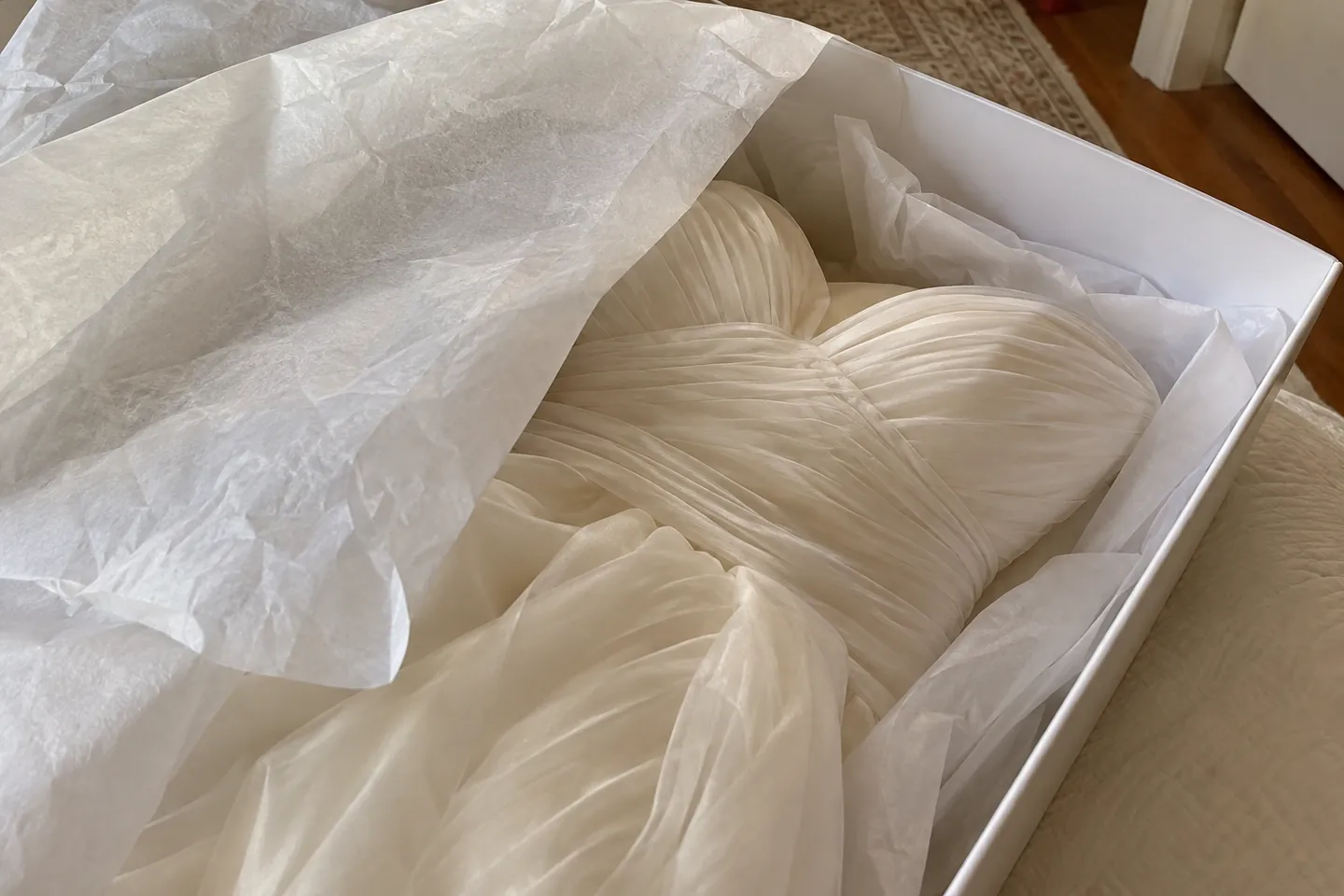
Choose a cotton or muslin garment bag, or a box made of acid-free card. Avoid plastic, which traps moisture and can leave marks on satin. Wrap the bodice, the sleeves and the skirt in acid-free tissue paper, and keep the folds soft and wide.
Care and storage checklist
Tick the steps you have completed for your gown.
Fold the gown along existing seams where possible, and place tissue in every fold. Avoid sharp creases, which can stay in the fabric for years. If the gown is long, consider a box deep enough for the skirt to lie flat.
Choose the right storage place
Store the gown in a cool, dry, dark place with stable temperature. Attics and basements are often too hot, damp or variable. A closet inside the home is usually better. Keep the gown away from windows and from direct sunlight, which fades ivory fabrics and weakens silk.
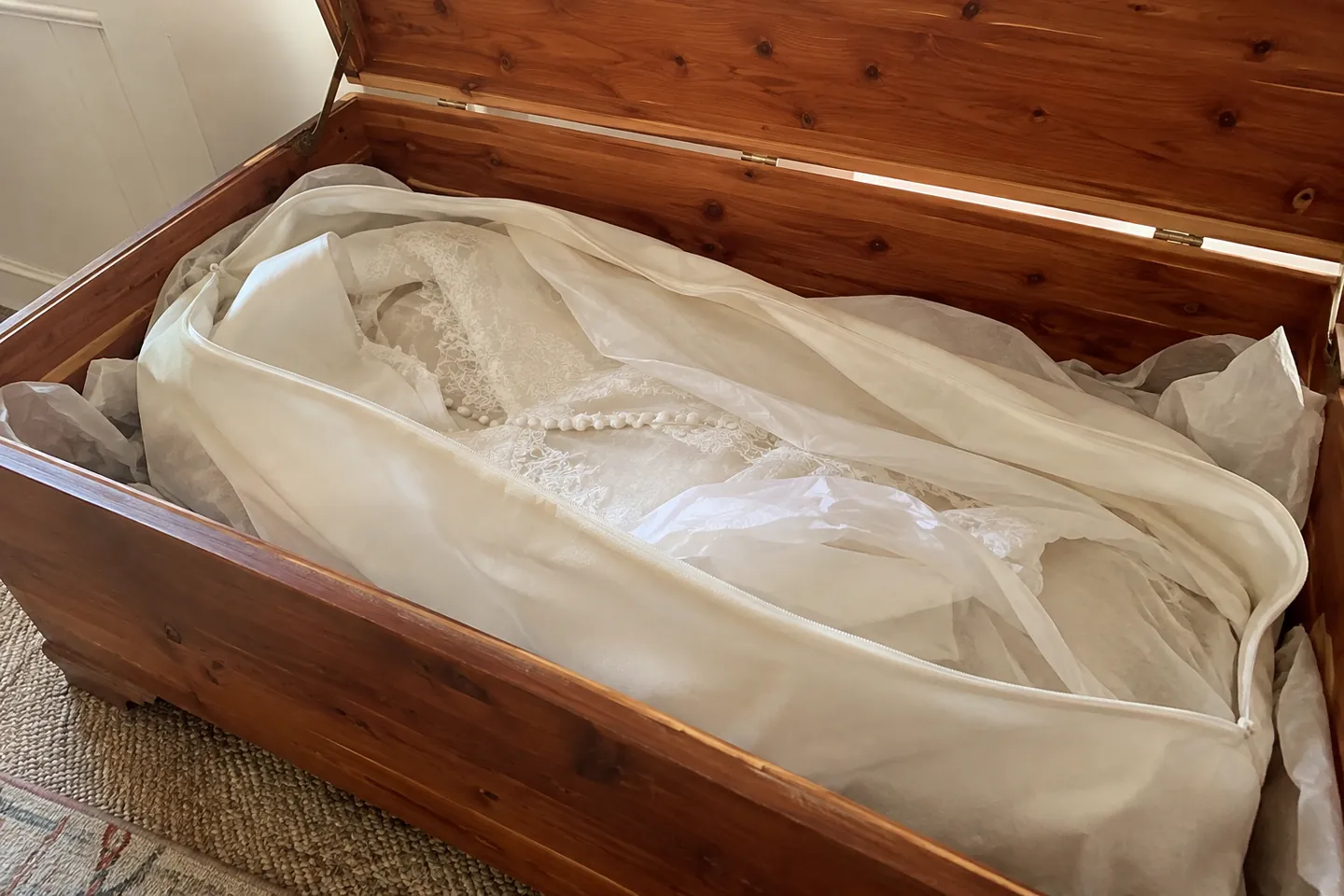
A cedar chest can be a good place, but keep the gown wrapped so it does not touch the wood directly. Wood can release oils and odours, and rough grain can snag lace.
Check the gown every year or two
Open the box once a year or two and check the gown. Look for mould, insect damage, yellowing and any new marks. Refold the gown along different lines so the creases do not set in one place. If you see a problem, contact the cleaner before it spreads.
Keep the cleaning receipt and the packing notes in the box. A future cleaner or seamstress will find them useful if the gown is ever altered for a family member.
Care for the veil and accessories
Store the veil flat in its own box, away from the gown, and keep the headpiece and comb wrapped so they do not scratch the fabric. Store shoes in breathable bags, and keep jewellery separate so metal does not mark the fabric.
If you plan to pass the gown on, make a note of the cleaning history and the storage method. The gown will last longer with a clear record.
Avoid common mistakes
- Leaving the gown in its wedding bag for months
- Storing it in a plastic dry-cleaning bag
- Hanging a heavy gown by the shoulders for years, which stretches the fabric
- Keeping it in a hot car, a garage or a damp basement
- Ironing the gown instead of steaming it lightly
What to do about yellowing and older stains
If a gown has already yellowed, do not try to fix it yourself. Bridal cleaners have specific methods for old marks, and some of them need a longer treatment with a gentle process over several days. Ask for an assessment before any work begins, and ask whether the yellowing is in the fibres or on the surface, because the answer changes the expected result.
Some stains are caused by perfume, hairspray or lotions, and these can change colour after years in storage. Tell the cleaner what the gown was exposed to on the day, because this helps them choose the right treatment. A written note of what you remember is useful, even if it seems minor.
Handling the gown safely
Wash your hands before touching the gown, and remove rings, bracelets and watches. Lift the gown from the hanger or the box by the bodice or the skirt's support seams, never by the lace or the beaded areas. Support the train and the skirt when you move it, so the weight is spread and no seam takes the strain.
Keep the gown away from food and drink on the day after the wedding, and ask a friend or a family member to take charge of it while you change. A simple rule of carrying it in a clean garment bag between the venue and home removes most of the risk.
Keep a record for the future
Write down the cleaning date, the cleaner's name, the storage method and the date of the next check. Keep this note with the gown. If the gown is passed on to a relative or sold later, the record shows its history and helps the next owner decide whether to have it cleaned again before use.
Preparing the gown for a long storage period
If the gown will not be opened for years, prepare it carefully before it goes into the box. Make sure it is fully dry after cleaning, because trapped moisture is the main cause of mildew. Remove any plastic hangers, clips and pins, and check the seams for loose beads or thread that could catch on the tissue.
Use a fresh sheet of tissue each time you repack. Used tissue can carry dust, and fresh paper keeps the folds clean. Label the box with the year and the contents, but avoid writing directly on the box lid in a way that could transfer ink to the fabric.
Keep the box in a space that does not change temperature sharply. A room with steady conditions protects the fabric better than an attic that is hot in summer and cold in winter.
Frequently asked questions
How soon should a wedding dress be cleaned?
Ideally within four to six weeks of the wedding. Stains set and yellow over time, so the sooner the better.
Can I store a wedding dress in a plastic bag?
No. Plastic traps moisture and can cause yellowing or mildew. Use a cotton or muslin bag or an acid-free box instead.
Should I hang or fold the gown?
Fold it in a box with acid-free tissue for long-term storage, because hanging can stretch the bodice and skirt over time. Hanging is fine for short periods.
How do I get rid of a yellow tinge?
Ask a professional bridal cleaner. Do not try bleach or home remedies, which can damage the fabric.
How long can a wedding dress last?
With proper cleaning and storage, a gown can last for decades. The key is avoiding light, moisture and insects, and checking the box regularly.
Keep reading
Buying guide
How to Buy a Used Wedding Dress, Step by Step
Buying a used wedding dress? Check the condition, confirm the fit and history, judge the price fairly and ask the right questions before you pay.
7 min read
Accessories
Bridal Veil Lengths: Fingertip, Chapel, Cathedral and More
Bridal veil lengths explained, from fingertip and waltz to chapel and cathedral. Learn how to choose a veil that suits your gown, venue and height.
6 min read
Fabrics
Wedding Dress Fabrics: Satin, Crepe, Tulle, Chiffon and Lace
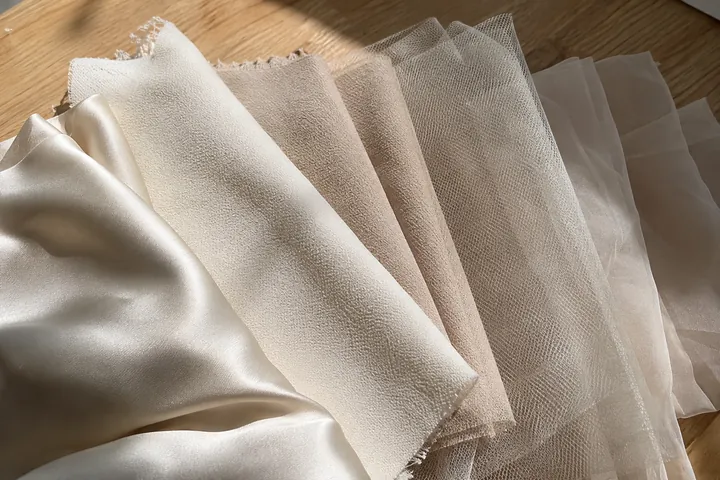
Compare the main wedding dress fabrics, including satin, crepe, tulle, chiffon, organza and lace, by look, drape, comfort, care and cost.
6 min read