Prom and formal
Prom and Formal Dress Sizing: How to Measure and Choose
How to measure yourself for a prom or formal dress, read a size chart correctly, choose between sizes and decide when alterations make sense.
In this guide
- Measure yourself correctly
- Read the size chart with care
- Choose the size by the bust, then fix the rest
- Decide whether a dress needs alterations
- Choose the right length and shoe height
- Check the fabric and stretch
- When to buy a size up or down
- Choose the right formality
- Fit checklist for the final try-on
- Keep a record of your measurements
- Buying online without a fitting room
Prom and formal dresses are sized differently from one brand to the next, so the size on the label is only a starting point. Measure your bust, waist and hips, compare them with the brand's own chart, and choose the size that fits the largest of your measurements. Then decide which fit issues an alteration can solve.
Measure yourself correctly
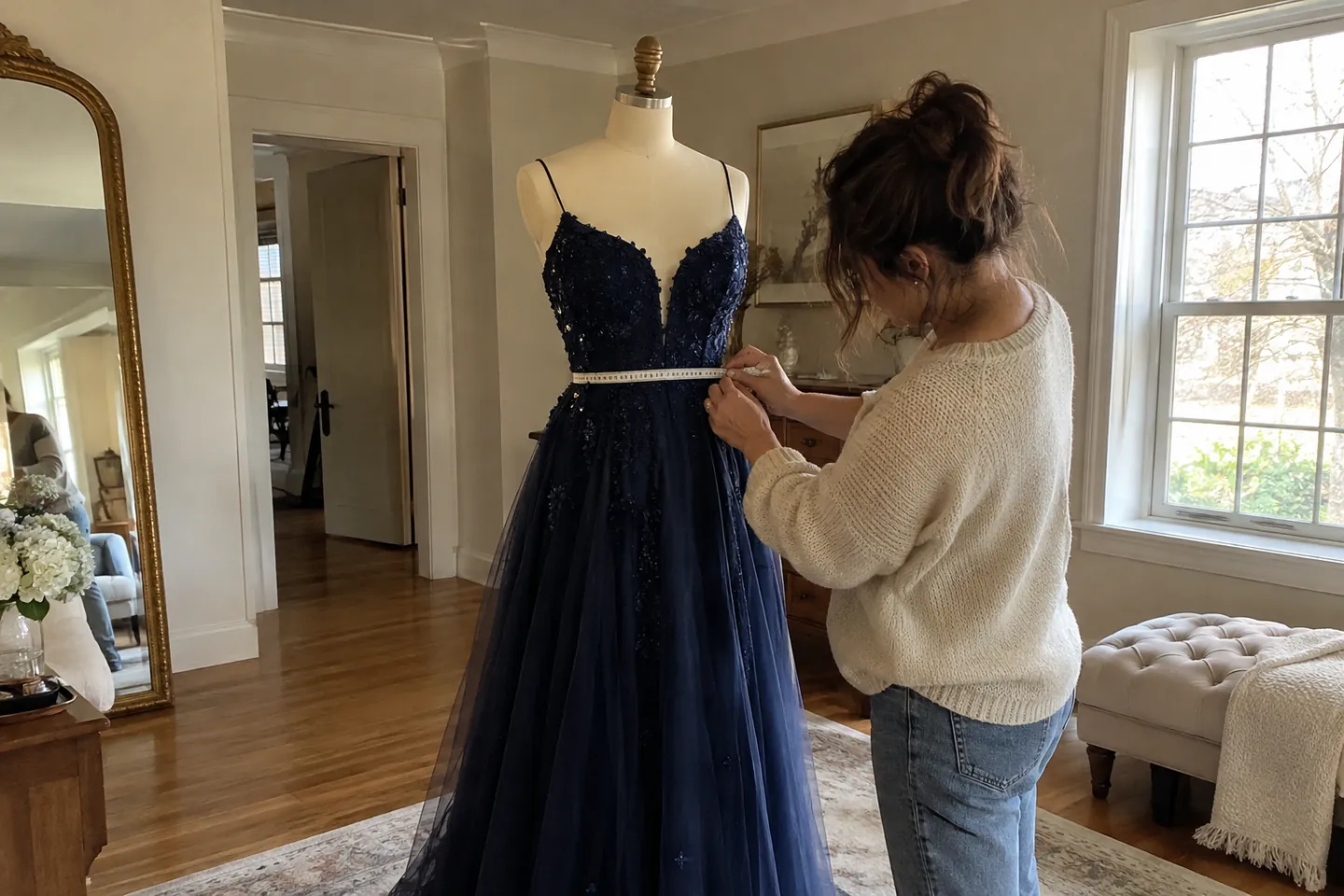
Use a soft tape measure and stand straight, in the underwear you plan to wear with the dress. Keep the tape snug but not tight, and parallel to the floor.
- Bust: around the fullest part of the chest, with the tape level across the back
- Waist: around the narrowest point, usually just above the belly button
- Hips: around the fullest part of the hips and seat
- Height: barefoot, and the heel height you plan to wear
Measure twice. A small change in the tape can move a measurement by an inch.
Size estimator
Compares your measurements with a typical chart. It is a starting point only.
Enter your three measurements.
Approximate US misses chart (inches)
| Size | Bust | Waist | Hips |
|---|---|---|---|
| 0 | 31.5 | 24 | 34 |
| 2 | 32.5 | 25 | 35 |
| 4 | 33.5 | 26 | 36 |
| 6 | 34.5 | 27 | 37 |
| 8 | 36 | 28.5 | 38.5 |
| 10 | 38 | 30 | 40 |
| 12 | 40 | 32 | 42 |
| 14 | 42 | 34 | 44 |
| 16 | 44 | 36 | 46 |
Approximate values. Always use the chart of the brand you are buying from.
Read the size chart with care
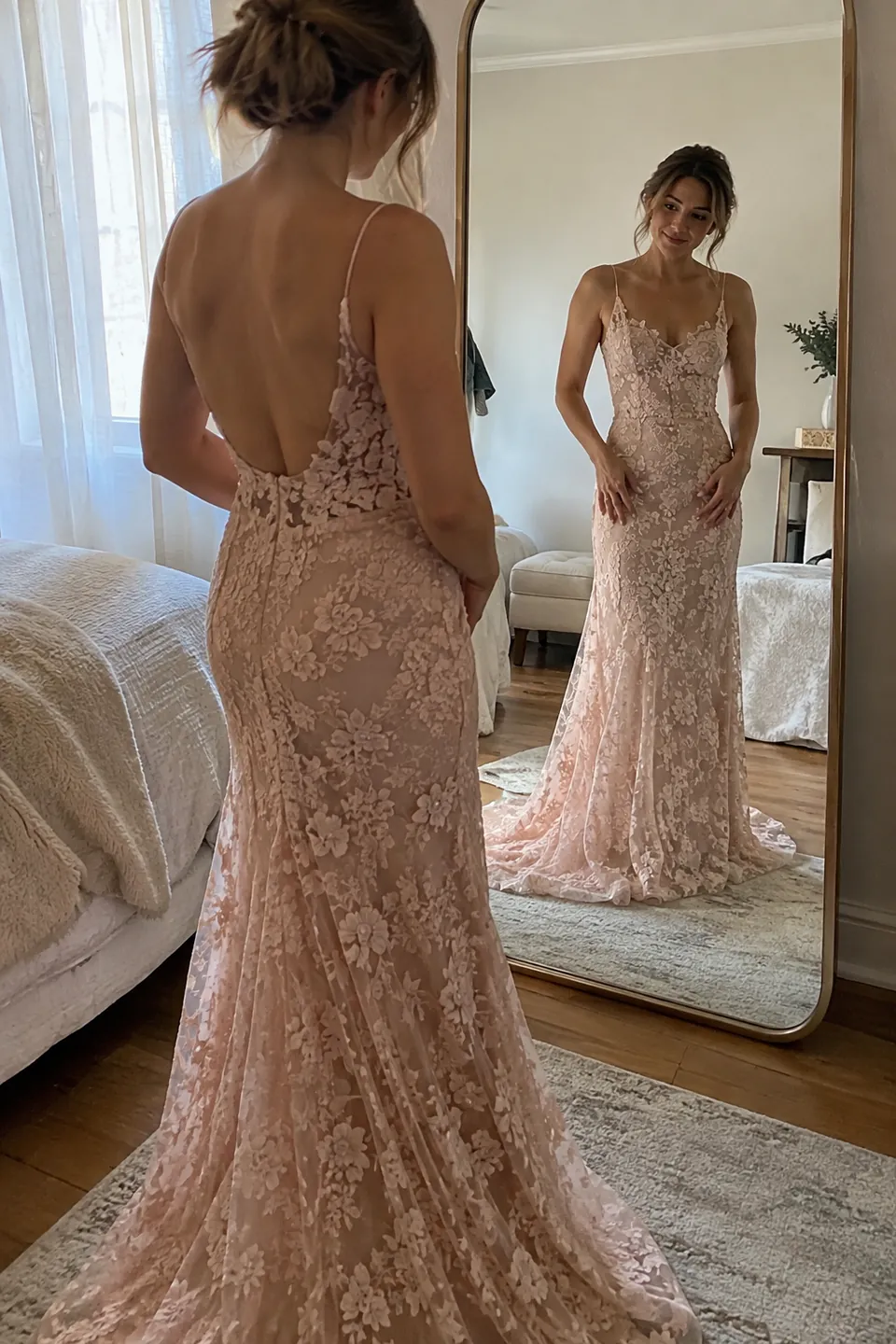
Size charts show the body measurements each size is designed for. Check whether the chart is in inches or centimetres, and whether it lists the bust, waist and hip separately. Some brands size by height and bust, others by bust, waist and hip.
As a rough guide, a typical US misses chart places a size 6 at a bust of about 34.5 inches, a waist of about 27 inches and hips of about 37 inches. A size 10 sits near a bust of 38 inches, a waist of 30 and hips of 40. These figures are approximate, so always use the chart of the brand you are buying from.
Choose the size by the bust, then fix the rest
If your measurements fall into different sizes, choose the size that fits the bust. Bodices are harder to alter than skirts, and a bodice that is too tight can split or pull badly. Waist and hip changes are usually easier, because a skirt can be taken in or let out.
If the bust fits but the waist is loose, a seamstress can take in the back seam or the side seams. If the hips are tight, a dress with a fitted skirt may need a larger size or a different cut, such as an A-line.
Decide whether a dress needs alterations
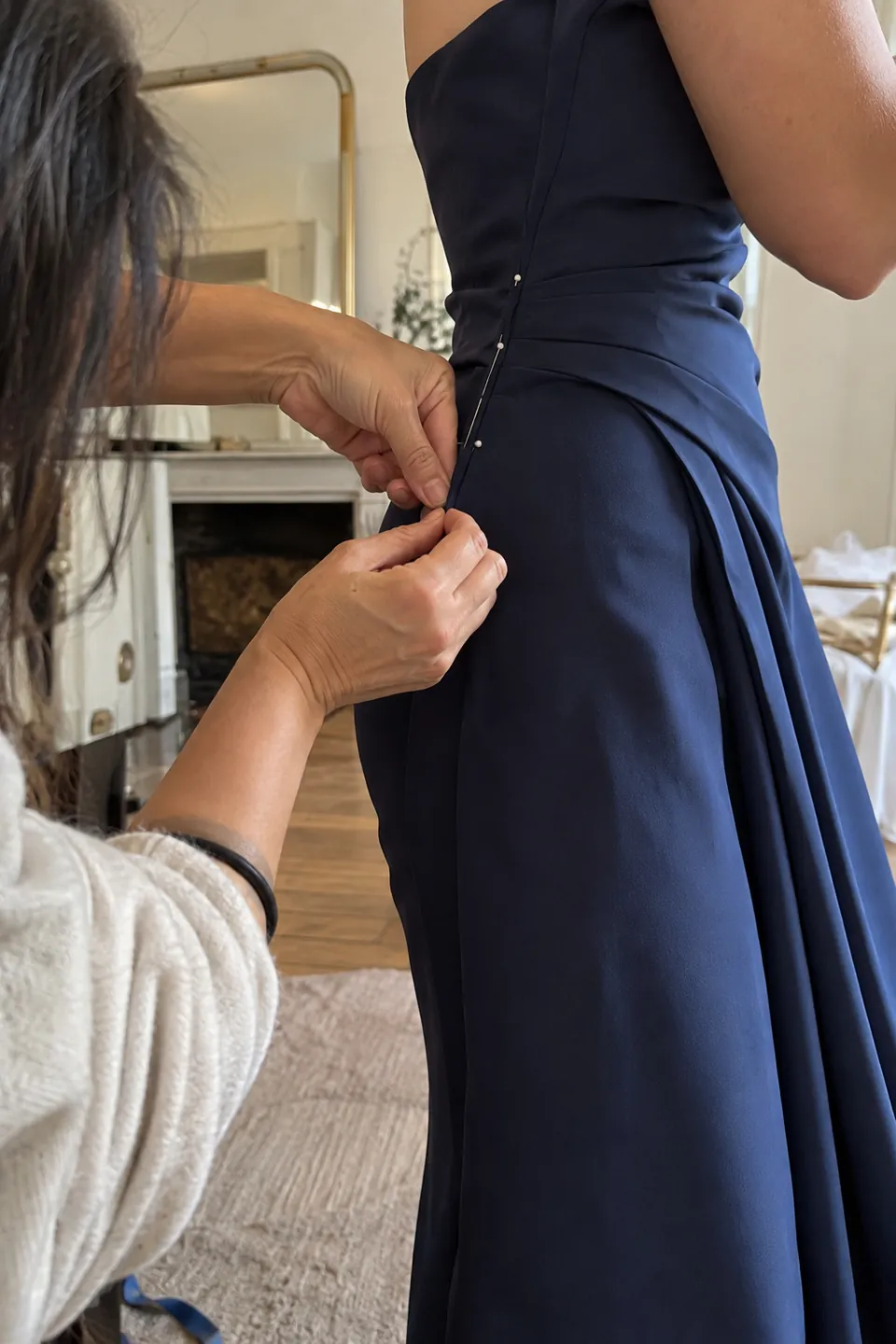
Some changes are routine for prom and formal gowns: hemming, taking in the waist, and adjusting straps. Others are harder: a bust that gapes or pulls, or a dress with heavy beading that must be unpicked to change a seam.
Ask yourself three questions. Does the dress fit the bust without pulling? Can the straps sit where they should? Does the hem land correctly with the shoes you will wear? If the answer to the first is no, consider another size or another cut.
Choose the right length and shoe height
Prom and formal dresses look different depending on the hem. A floor-length gown should just touch the floor in your heels. A midi or tea length should sit at the mid-calf, and a short dress should be checked with the shoes you will wear, because the hem changes when you walk.
Try the dress on with the shoes. A dress hemmed flat can end up too long or too short once heels are on.
Check the fabric and stretch
Stretch fabrics such as jersey and some lace blends are more forgiving across the hips and bust. Structured fabrics such as satin, taffeta and sequins do not stretch, so the size must be right before you buy.
Lined dresses hold their shape better. Unlined dresses can show every line of the body, so check the fit closely in a mirror and from the side.
When to buy a size up or down
Buy a size up if the dress is fitted through the bust and the fabric has no stretch. Buy a size down only if the seller says the dress can be let out and the seams have enough allowance. Ask the seller for the seam allowance measurements if you are not sure.
If you are between sizes and the dress has a zip and a corset back, you usually have more room to adjust the fit than with a dress that has a fixed back.
Choose the right formality
The event sets the level of formality. A school prom, a black-tie dinner, a gala and a garden party each ask for a different length and fabric. For a black-tie event, a floor-length gown in satin, crepe or lace suits most guests. For a garden party or a daytime event, a midi or tea-length dress in chiffon or cotton is usually more comfortable. Check the invitation or the organiser's dress code before you buy, because a dress that is too casual or too formal can be as awkward as one that does not fit.
Think about the shoes too. Heels change the length, and a floor-length gown worn with flat shoes can drag. If you plan to wear heels, have the dress fitted with them on.
Fit checklist for the final try-on
Before you buy, or at the final fitting, check these points:
- The bodice sits flat across the bust, with no gaping at the top edge
- The straps stay in place when you raise your arms and reach forward
- The waist sits at your natural waist, not above or below it
- The zip closes without strain, and the back lies flat
- The hem clears the floor or the mid-calf in the shoes you will wear
- You can sit, climb stairs and dance without the seams pulling
- The fabric does not show undergarment lines or cling where you do not want it to
If three or more of these points fail, look at a different size or a different cut before deciding on alterations.
Keep a record of your measurements
Write down your measurements with the date, and keep them with your receipt. If you need to order a second dress for another event, you will have a reliable starting point. Measurements change over time, so update the record each season, or whenever a dress that fitted last year feels different.
Buying online without a fitting room
Online shopping works best when you have a reliable set of measurements and a clear return policy. Check the return window, who pays for return postage, and whether the seller will accept a dress that has been altered. Some sellers will not accept a return once the tags are removed or the dress has been hemmed.
Read the reviews for fit notes, not only for the overall rating. Comments such as "runs small in the bust" or "the back is shorter than the chart shows" are more useful than a star rating. Where photos show the dress on a model, compare the model's height and measurements with yours before you assume the dress will fall the same way.
Frequently asked questions
Should I buy the size on the label or the measurement chart?
Use the measurement chart. Labels differ by brand, and the chart tells you the body measurements the dress is designed for.
Can a prom dress be altered at the bust?
Sometimes. Taking in is usually possible, but letting out depends on the seam allowance and any beading or boning. Ask a seamstress before you buy.
How far in advance should I order a formal dress?
Order early enough to allow for alterations. Many people order at least six weeks before the event, and earlier if the dress needs changes.
What if my measurements fall between two sizes?
Choose the size that fits the bust, then ask whether the waist and hips can be altered to fit.
Is a stretch fabric easier to fit?
Stretch fabrics are more forgiving, but they can also show lumps and lines. A good fit still matters, and a structured dress may look better on the body than a stretch dress that does not fit well.
Keep reading
Style guide
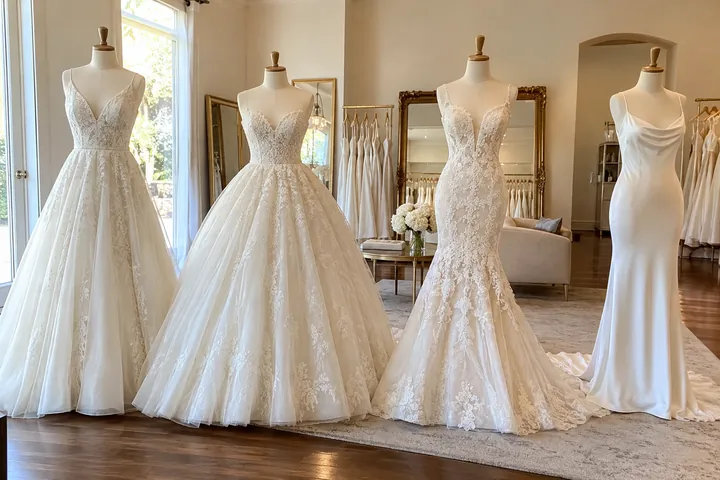
Wedding Dress Silhouettes: A-Line, Ball Gown, Mermaid and More
A practical guide to wedding dress silhouettes. Compare A-line, ball gown, mermaid, sheath and other shapes, and find the one that fits your venue and body.
6 min read
Alterations
Wedding Dress Alteration Costs and Timeline
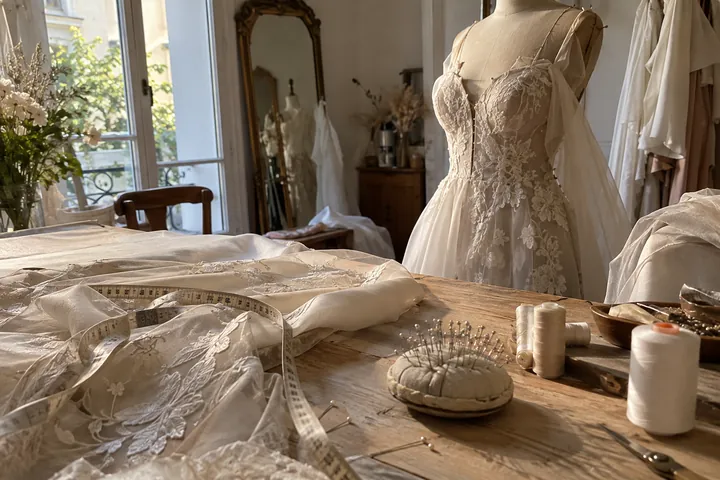
How much wedding dress alterations usually cost, which changes are expensive, and how far ahead to book your fittings so the gown is ready on time.
6 min read
Fabrics
Wedding Dress Fabrics: Satin, Crepe, Tulle, Chiffon and Lace
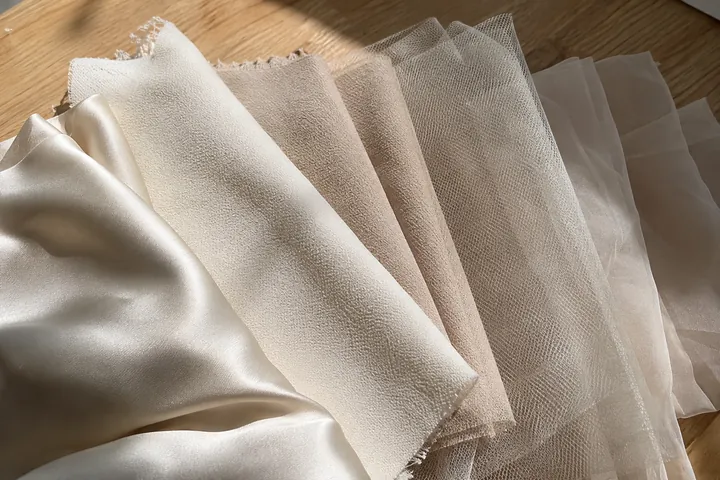
Compare the main wedding dress fabrics, including satin, crepe, tulle, chiffon, organza and lace, by look, drape, comfort, care and cost.
6 min read