Alterations and practical details
Horsehair hem wedding dress alterations: what to check
Separate length from skirt shape before altering a horsehair hem. Identify the layer, compare the proposed finish and record what your fitting quote includes.
Updated 01 November 2026
In this guide
A horsehair hem uses mesh braid to give a dress edge body. Ask which layer has it, what shortening will change, and whether the new finish keeps that shape. Bring the shoes and worn layers to your fitting. Get the work and desired result written into the quote.
What is a horsehair hem on a wedding dress?
Horsehair braid is a trim that can support a hem, rather than the name of the gown's main fabric. The American Sewing Guild describes modern braid made from nylon or polyester. A narrow supported edge and an entire underskirt do different jobs, although the word crinoline can also refer to the braid itself.
On a small screen, scroll the table sideways; use arrow keys when it is focused.
| Part to identify | What it tells you | What it does not establish |
|---|---|---|
| Mesh along an edge | Where local support has been added | The fiber of every other layer |
| Main skirt fabric | The textile you see and feel | How its edge has been finished |
| Separate underlayer | Another part of the skirt construction | Whether the visible edge also contains braid |
| Existing alteration | A finish someone has already changed | That the original designer's method remains |
Start with the wedding dress fabric guide if satin, organza and tulle are still unfamiliar. Then ask about the actual edge. A seller's fabric description may leave this detail out.
Does shortening the hem mean removing its support?
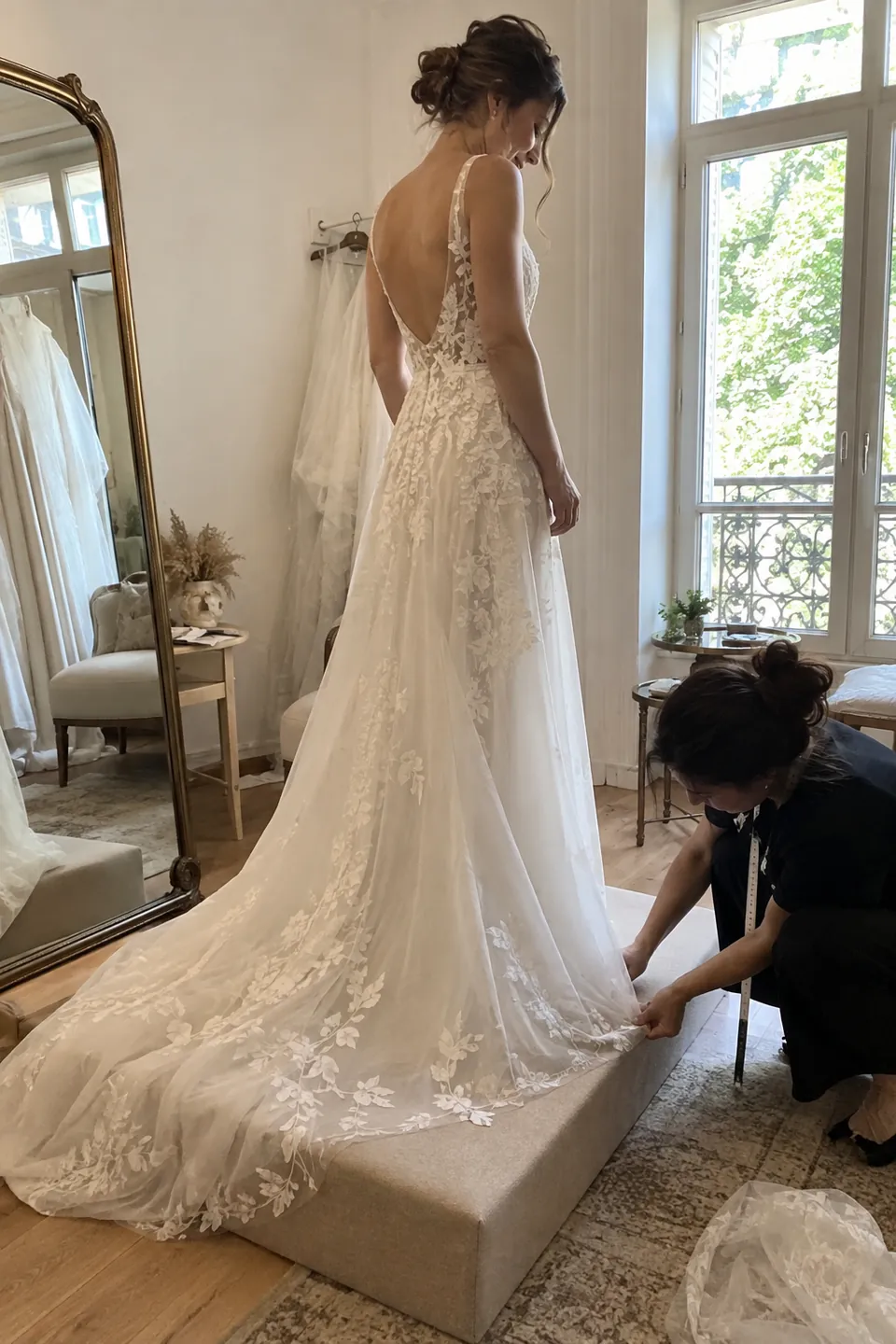
Shortening changes length; removing support can change the outline as well. Ask the specialist to separate those requests before agreeing to either. A shorter gown with a similar edge shape is a different brief from a shorter gown with a softer edge.
The Sewing Guild describes braid enclosed in a hem or used as a facing. Its placement therefore matters to the proposed work. Do not assume a strip can simply be cut away and the same appearance will remain. A photograph of another gown cannot reveal your dress's seam allowances or attachment method.
Write the preference in plain language: “I want less fabric on the floor, while keeping the current shape,” or “I would like the edge to look softer; please explain the options.” Those are requests to assess, not instructions to remove a component.
Can different skirt layers need different finishes?
Different layers can have different jobs and finishes. Identify the one being marked rather than treating every edge as a single hem. Ask the specialist to show it while the gown is supported appropriately, without pulling at an unfamiliar attachment.
Robes de Coeur's documented wedding-dress project is a useful example: its substantial skirt and sheer overlay received different treatment. That example demonstrates why a layer matters; it does not provide a pattern for another dress. A sheer edge may also make a trim more visible, depending on the construction.
For a used gown, ask what has already been altered. The secondhand wedding dress checklist helps organize the seller's information. Missing records mean the specialist must inspect the dress, rather than infer its original length from the listing.
What should an alteration quote include?
Ask the quote to identify the affected layer and the proposed edge finish. “Hem adjustment” alone may leave the shape decision unresolved. The specialist can explain whether existing braid would be retained, removed and reapplied, replaced, or handled through another assessed method.
On a small screen, scroll the table sideways; use arrow keys when it is focused.
| Record in the proposal | Useful question |
|---|---|
| Layer and area | Which skirt edge does this work cover? |
| Intended appearance | Are we retaining support or changing the outline? |
| Trim and finishing | What happens to the existing braid and its ends? |
| Related details | Does the work affect lace, a lining or another finish? |
| Fitting and approval | When will we check the complete worn arrangement? |
Use the alteration cost guide to compare written scope. There is no reliable universal horsehair-hem surcharge here. Construction, access and the agreed work must come before a gown-specific price. A low estimate that excludes a layer is not directly comparable with one that includes it.
What should you check at the fitting?
Check the agreed length and intended skirt shape together, wearing the shoes and layers planned for the day. Ask the specialist which movements are appropriate during the appointment. Your fitting checklist should identify the actual shoes, rather than only their advertised heel height.
Look at the front, sides and back with the specialist. Point out a section that seems to lift, twist or fall differently. Describe what you see without deciding that the braid is the cause. An outline can involve several layers, fit and how the gown is being worn.
Before leaving, repeat the agreed plan: which layer changes, what should remain similar, and what will be checked next. Keep a permitted photograph alongside the written notes. A picture preserves appearance; it does not replace the construction instructions.
What if the braid feels rough or the edge looks damaged?
Show the exact area to the specialist and ask how it should be finished. The Sewing Guild notes that braid ends can be prickly and need finishing. That does not mean every rough area is an exposed braid end, or that trimming it yourself will solve the problem.
Leave the component intact for assessment. Do not apply a general pressing temperature, adhesive or cutting method based on the word horsehair. Ask for care instructions that account for the gown's fabrics, trim and altered construction. Keep those instructions with the dress for the person helping you on the day.
Frequently asked questions
Is horsehair braid made from horsehair?
The name has a historical origin. The American Sewing Guild describes modern nylon or polyester braid. Check the actual trim or maker's information rather than assuming the fiber of an unidentified or older gown.
Is a horsehair hem the same as a petticoat?
An edge trim and a larger underlayer are different parts. Crinoline can also name the braid, so ask which physical component the speaker means.
Can a wedding dress with a horsehair hem be shortened?
Ask a specialist to inspect the layer and finish. The proposed method and result depend on the dress; a generic tutorial cannot confirm its available allowance or the work required.
Will removing the braid make the dress softer?
It can change local support, but the complete skirt includes other construction. Ask what appearance the specialist expects on this gown before authorizing removal.
Is there a standard cost for this alteration?
This guide does not set one. Compare quotes that identify the layer, trim work, finishing and fitting arrangements. A shared label such as hem adjustment can hide different work.
Should I cut a rough braid end before the fitting?
Leave it intact and show the area to the specialist. Ask for an assessed finish and care instructions rather than cutting, gluing or heating an unidentified component.
Sources checked
Keep reading
Alterations
Wedding Dress Alteration Costs and Timeline
How much wedding dress alterations usually cost, which changes are expensive, and how far ahead to book your fittings so the gown is ready on time.
9 min read
Fabrics
Wedding Dress Fabrics: Satin, Crepe, Tulle, Chiffon and Lace
Compare the main wedding dress fabrics, including satin, crepe, tulle, chiffon, organza and lace, by look, drape, comfort, care and cost.
8 min read
Alterations
What to Bring to a Wedding Dress Fitting
Prepare for a wedding dress alterations fitting with your shoes, foundation garments, accessories and a practical list of questions for the specialist.
5 min read