Planning
Flying With a Wedding Dress: A Practical Travel Plan
Plan flying with a wedding dress: check airline bag limits, protect the gown, arrange a fitting-to-travel handoff and prepare for arrival without a closet guarantee.
In this guide
Plan the bag before the flight
When flying with a wedding dress, check the operating airline's allowance for the filled garment bag, ask your bridal specialist how to pack that specific gown, and arrange a safe storage plan that does not depend on an onboard closet. Carrying the dress with you may be practical when it meets the rules, but a wedding dress is not automatically an extra free cabin item.
Begin with the route, the dress and the bag together. A lightly structured gown and a heavily beaded skirt create different packing problems. A long-haul cabin and a small connecting aircraft can offer different storage. You need a plan that works across the whole journey, including the connection and the trip from the airport.
Ask the airline about the actual journey
Check the airline operating each flight, not only the name that sold the ticket. Read the allowance for your fare and aircraft, then measure the bag with the dress packed inside it. Include any rigid hanger or protective container that changes its dimensions.
Ask these questions before travel:
- Will this filled bag count as my main carry-on or personal item?
- What size and weight limits apply to each flight, including a connection?
- Where can it be safely stowed if there is no closet space?
- What happens if cabin bags have to be checked at the gate?
- Does any special arrangement need to be agreed in advance?
Keep the answers and the relevant policy with your travel information. A general customer-service answer is useful preparation, but it does not create space that the aircraft lacks. Do not block an aisle or place a dress somewhere the crew has not approved.
Two US airline examples, checked in October 2026
These examples show why one “airline rule” is not enough. Recheck the linked policy and your itinerary before departure.
| Airline | Published cabin-bag information | What to establish for your gown |
|---|---|---|
| American Airlines | One carry-on plus a personal item; its page lists a soft-sided garment-bag limit of 51 inches in combined dimensions | Whether your packed bag meets the relevant limit and can be stowed on every segment |
| Delta | One carry-on plus a personal item; standard carry-on dimensions are 22 × 14 × 9 inches, with aircraft and partner exceptions | Whether the bag fits and whether a regional connection changes the storage plan |
Sources: American Airlines carry-on policy and Delta carry-on policy. Neither example means a large dress gets unlimited space. If another airline operates your flight, use that airline's current rules instead.
Pack for the gown's construction
Ask the salon or alterations specialist to show you how to support the bodice, manage the train and protect decorations. Have them demonstrate with the actual bag you intend to use. Take your own notes so the method can be repeated for the return journey.
A hanger should support the gown as its maker intends. Thin decorative shoulder straps may not be the right way to carry the full weight. Check for internal hanging loops and ask how to use them. Keep beadwork, hooks and fastenings from catching on delicate layers, and make broad, supported folds only where the construction allows.
Do not pack shoes, cosmetics or a leaking liquid next to the gown without a suitable separate barrier. Avoid adding heavy items on top simply because there is room in the bag. The goal is to protect the shape and surface, not to compress the dress into the smallest possible space.
Alaska Airlines' packing feature with designer Luly Yang offers a garment-bag method and acknowledges that closet space is limited. It is a packing reference from 2016, not a current guarantee about the aircraft or baggage allowance on your booking.
Make a plan for a small aircraft or full cabin
Imagine the dress fits the first flight's allowance, but a connecting service uses a smaller aircraft. The weak point in the plan is the connection, even if the first crew can hang the bag. Ask about that segment before leaving, while you still have time to change the packing arrangement.
If the dress cannot travel in the cabin within the applicable rules, discuss the available alternatives with the airline and your bridal specialist. A protective case, a different bag or an approved special arrangement may be needed. An extra seat is not a do-it-yourself workaround: the carrier must agree how an item can be secured, and its conditions vary.
Decide in advance what you will do if asked to check the bag. Speak to the gate staff with time to explain the contents and establish the permitted options. Hoping that someone will make an exception leaves the important decision until the busiest point of the journey.
Build travel into the fitting schedule
Give the alterations specialist your departure date as well as the wedding date. Collection needs to happen before you leave, with enough time to check the dress, practice packing and resolve any problem. The alteration-cost guide explains what to include in a written estimate and fitting plan.
Bring the intended shoes and undergarments to the relevant fitting. Practice sitting, walking and managing the train before collection. Ask whether pressing is included, how the dress should travel after pressing and whether it is safe to steam at the destination.
If you are buying a used wedding dress, allow time for delivery, inspection, cleaning assessment and alterations before that travel deadline. A listing's expected arrival date is not the same as a gown ready to pack.
Unpack before reaching for steam
At the destination, choose a clean, dry place with enough room to open the bag. Support the dress as instructed, inspect it and let it hang or rest in the appropriate position. Keep it away from food, cosmetics, pets and a crowded bathroom.
Do not assume that every satin, lace or tulle gown can be steamed in the same way. The care label, lining, embellishments and construction matter. Our fabric guide helps you ask better questions, but the maker or a qualified cleaner should advise on a delicate or uncertain gown. Avoid a last-minute experiment with direct heat or water marks.
Arrange professional pressing in advance if the dress requires it. Confirm the service, timing and collection plan; do not assume the hotel has the equipment or expertise for your particular gown.
Keep a simple handoff note
Write one short note for whoever will help with the dress: how it hangs, where the train goes, which fastenings need care and who to contact if there is a problem. Keep the airline information separate from the garment-care instructions so each is easy to find.
The same plan serves the return journey. Leave room for a dress that may need professional cleaning and should not be packed damp. A few clear decisions before departure are more useful than a promise that a garment bag will prevent every crease.
Primary sources checked 26 October 2026: American Airlines, Carry-on bags and size limits; Delta, Carry-On Baggage. Packing reference: Alaska Airlines, Flying with Luly, 27 April 2016. Recheck current itinerary-specific rules before departure.
Keep reading
Buying guide
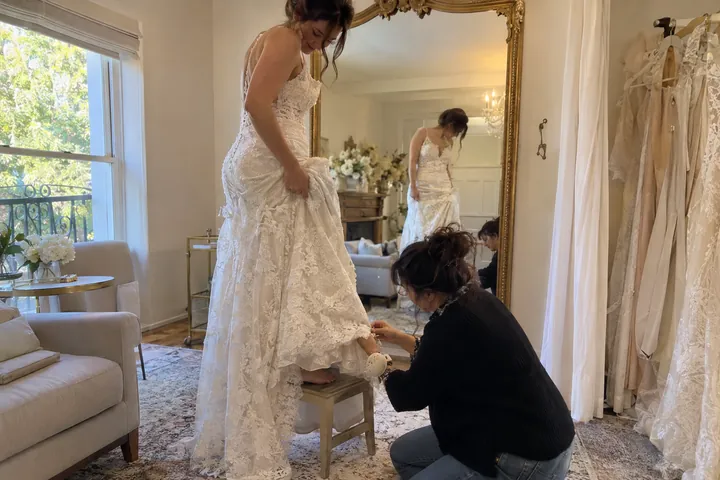
How to Buy a Used Wedding Dress, Step by Step
Buying a used wedding dress? Check the condition, confirm the fit and history, judge the price fairly and ask the right questions before you pay.
7 min read
Alterations
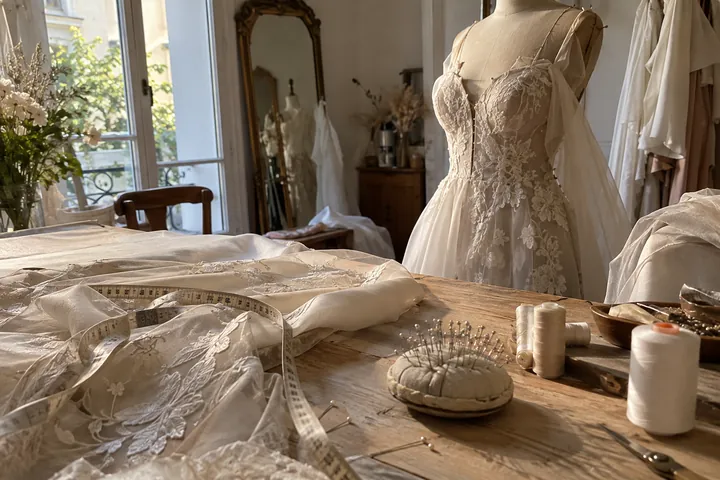
Wedding Dress Alteration Costs and Timeline
How much wedding dress alterations usually cost, which changes are expensive, and how far ahead to book your fittings so the gown is ready on time.
7 min read
Fabrics
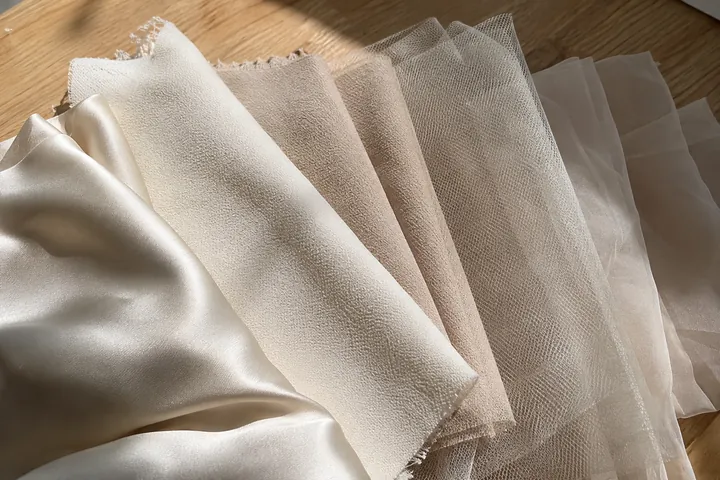
Wedding Dress Fabrics: Satin, Crepe, Tulle, Chiffon and Lace
Compare the main wedding dress fabrics, including satin, crepe, tulle, chiffon, organza and lace, by look, drape, comfort, care and cost.
6 min read