Alterations and practical details
Can You Add Pockets to a Wedding Dress? What to Check
Check whether your gown can take pockets, what to bring to a consultation and how to test the result. Two decision aids keep the request specific.
Updated 30 October 2026
In this guide
- Can pockets be added to every gown?
- Are built-in pockets the same as added pockets?
- What do you actually want to carry?
- What should the consultation establish?
- Is the pocket addition included in the price?
- How should you check the finished result?
- What if the specialist advises against it?
- Sources checked on October 30, 2026
A bridal alterations specialist can assess whether pockets will work in your actual gown. Bring the items you want to carry, ask how the change affects the skirt, and request a separate written scope. A dress with a roomy silhouette does not automatically have the right internal construction for the result you want.
Can pockets be added to every gown?
Ask for an assessment of the dress in hand, not a promise based on a photograph. The skirt's seams, layers and existing alterations matter alongside the outer fabric. A pocket opening needs to be usable without making the dress uncomfortable or changing its line in a way you dislike.
Estelle Bridal describes assessing the seam, fabric and available allowance for this alteration. Elena's Bridal Alteration Shop lists pockets as a redesign service. These are examples of what particular specialists offer, not evidence that every dress can accept the same change. Do not open a seam yourself to investigate.
On a small screen, scroll the table sideways; use arrow keys when it is focused.
| Your situation | Useful next question |
|---|---|
| Still choosing a gown | Does this exact model already include usable pockets? |
| Own the gown | Can the specialist inspect its construction before agreeing to the addition? |
| Pockets are essential | What is the fallback if this gown cannot accommodate them? |
Are built-in pockets the same as added pockets?
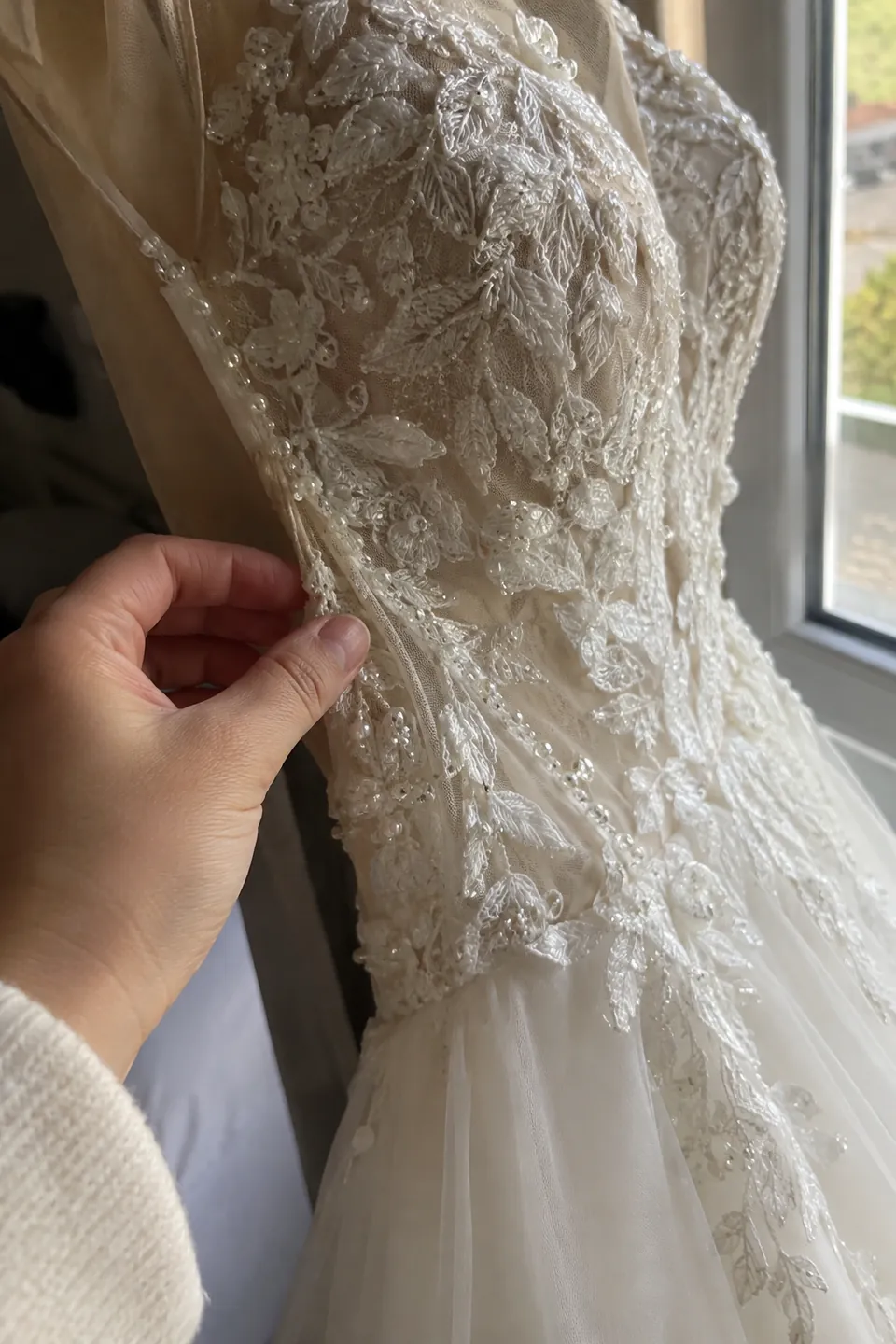
Confirm which arrangement you are buying. A manufacturer's original pocket and an alteration proposed by a seller are different things. Ask to see existing pockets in the actual dress, and clarify whether any displayed sample differs from the model or size you will receive.
If the plan is to add them later, identify who will do the work and when they can assess it. A statement that “a seamstress can do that” is not the specialist's approval. The used wedding dress guide helps separate a seller's description from the checks you still need before purchase.
What do you actually want to carry?
Name the object before discussing pocket size. A folded tissue, a phone with its case and a collection of cosmetics are different requests. Bring the real item or clearly identify what is provisional; a phone-shaped photograph does not show its weight or how it feels when you sit.
Write down a small brief: the item you need, when you need access, and whether you are comfortable with a visible outline. For example, a reader might want a tissue during the ceremony but prefer someone else to hold the phone for photographs. That is a planning example, not a load limit or a rule about how a bride should look.
What should the consultation establish?
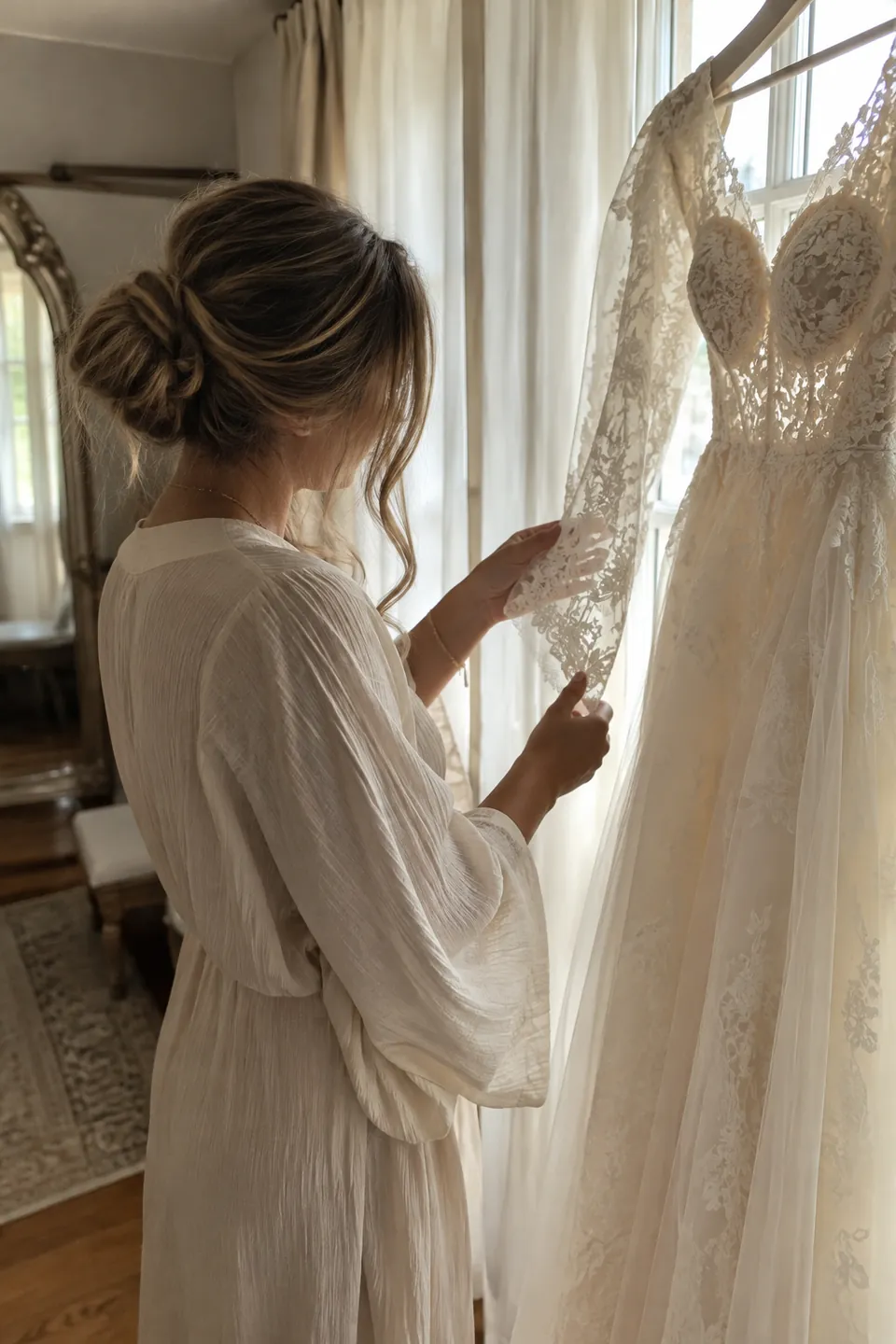
Ask the specialist to explain the proposed location, access and effect on the gown. Show the areas where you want the skirt to stay smooth, then discuss the trade-off with practical storage. The fabric guide can help describe the layers, but a fabric name alone cannot approve the alteration.
Mention prior repairs, an overskirt or other detachable pieces. Ask whether they change access to the opening. If you are also altering the fit, agree which decisions need to be settled together; do not assume a pocket can be added after every other fitting without another check.
Is the pocket addition included in the price?
Request an itemized answer rather than borrowing an online average. MISSIA's own service page distinguishes additional customization, including inside pockets, from some fit adjustments included in its offer. That Canadian shop's policy illustrates why the scope matters; it is not a US price quote for your gown.
Use the alterations cost guide to organize questions about labor, materials and appointments. Confirm the agreed work, price, timing and approval process for changes with your specialist. No pocket price or completion deadline in this article replaces that agreement.
How should you check the finished result?
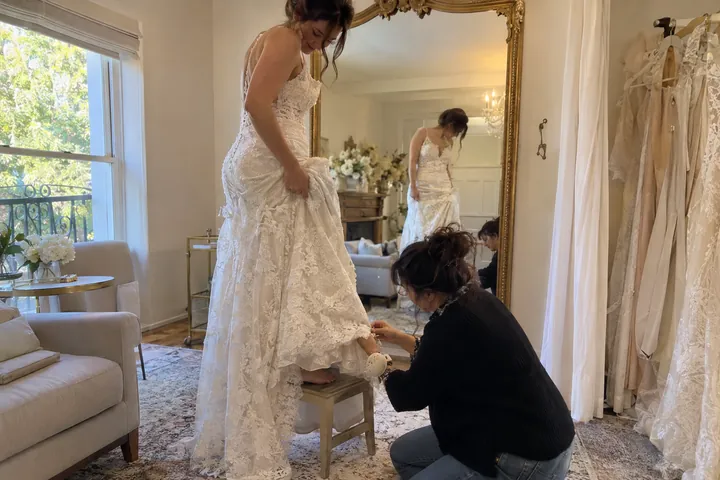
Test the agreed use with the specialist's permission at a fitting. Check the empty pocket first, then the intended item. Try reaching it, sitting, standing and walking while someone observes the skirt from more than one angle. Say if the opening pulls, the contents move awkwardly or access requires lifting another layer.
Repeat the relevant checks with the complete outfit. The fitting checklist covers the shoes and foundation pieces to discuss with the studio. A satisfactory empty-pocket photograph does not demonstrate how the dress behaves with your belongings inside.
What if the specialist advises against it?
Keep the practical goal and change the carrying plan. A separate bag or a trusted person holding an item may solve access without altering the gown. Ask about alternatives, but avoid pressing for an invisible result that the specialist cannot deliver in this construction.
If pockets are a condition of purchase, resolve that before committing to a dress that needs them added. This journal provides a consultation framework, not a sewing service, appointment booking or guarantee that a particular gown can be changed.
Sources checked on October 30, 2026
- Estelle Bridal: gown construction and pocket assessment
- Elena's Bridal Alteration Shop: redesign and consultation services
- MISSIA: alteration scope and additional customization
Frequently asked questions
Does an A-line shape guarantee pockets can be added?
The shape alone is insufficient. Have the actual seams, layers and existing alterations assessed by the specialist who would do the work.
Can a seller approve a future alteration?
A seller can describe the dress, but a proposed addition still needs the performing specialist's assessment and agreement.
Must pockets hold a phone?
Choose their purpose before specifying them. Test your intended phone and case if that is the requirement; do not assume an empty pocket proves it works.
Is there one standard pocket alteration price?
This guide provides no universal price. Ask for a quote covering the actual gown, materials, agreed work and appointments.
Does adding pockets replace a fitting?
Keep the fitting. Check the finished pocket in the complete outfit and with the intended contents, under the specialist's guidance.
Can you carry a separate bag instead?
That is an alternative when it suits your plans. Compare access and convenience without assuming the gown must be altered to accommodate every item.
Keep reading
Buying guide
How to Buy a Used Wedding Dress, Step by Step
Buying a used wedding dress? Check the condition, confirm the fit and history, judge the price fairly and ask the right questions before you pay.
9 min read
Alterations
Wedding Dress Alteration Costs and Timeline
How much wedding dress alterations usually cost, which changes are expensive, and how far ahead to book your fittings so the gown is ready on time.
8 min read
Fabrics
Wedding Dress Fabrics: Satin, Crepe, Tulle, Chiffon and Lace
Compare the main wedding dress fabrics, including satin, crepe, tulle, chiffon, organza and lace, by look, drape, comfort, care and cost.
7 min read